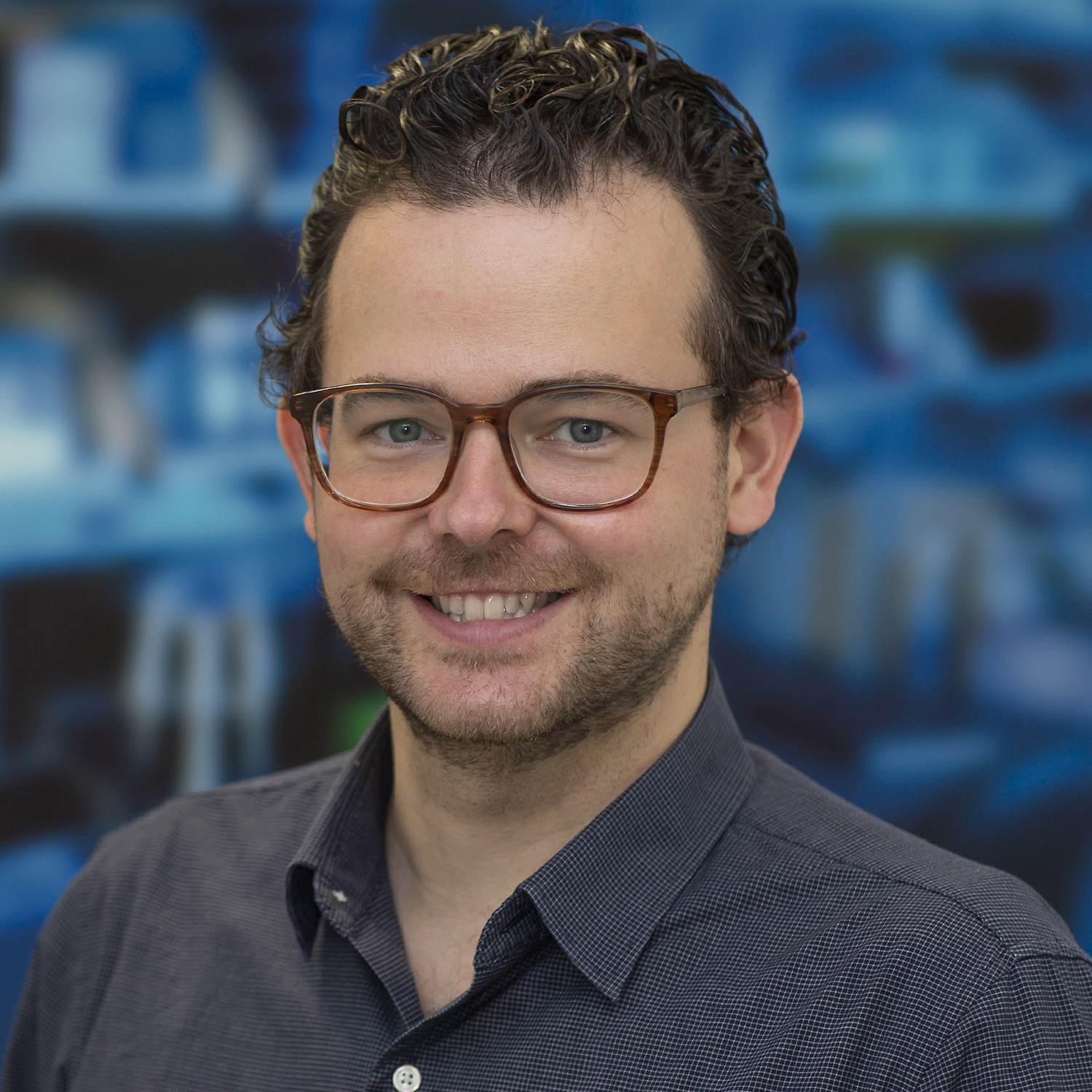
Floris Barthel
Principal investigator
As an Assistant Professor at the Cancer and Cell Biology Division at the Translational Genomics Institute (TGen) and the Department of Computational and Quantitative Medicine (DCQM) at the Beckman Research Institute (BRI) at City of Hope (COH), I lead a basic and translational research program utilizing state-of-the-art genomic approaches to study the development and evolution of glial brain tumors (gliomas). I am a full program member of City of Hope’s Comprehensive Cancer Center affiliated with the Molecular and Cellular Biology of Cancer (MCBC) program. My lab has a particular interest in the fundamental role of telomere dysfunction in glioma development, but is generally interested in all aspects of tumor evolution, including, but not limited to, longitudinal studies of therapy response assessed by genomic analysis of tumor tissue and liquid biopsies. The lab has received both public and private philanthropic funding for several translational and basic science research projects in this domain.
My medical and postdoctoral training have given me a broad, fundamental understanding of pathology, molecular biology, genetics and computational biology. My post-doctoral work in the group of Dr. Roel Verhaak aimed to define the molecular makeup of adult glial brain tumors in order to refine the taxonomy of disease and discover new therapeutic vulnerabilities. Using high-throughput sequencing and computational analysis I redefined the set of genes associated with diffuse glioma, used molecular profiling to enhance the resolution with which these tumors could be classified, and provided insights into the progression from low- to high-grade cancer. My work played a small role in the 2016 revision and 2021 edition of the internationally accepted World Health Organization guidelines for the classification of brain tumors.
Papers
Telomere Dysfunction in Human Astrocytes Drives Acrocentric Chromosome Instability and Nucleolar Reorganization Mbegbu et al. 2026. bioRxiv.
KaryoScope: rapid, alignment-free sequence annotation for the pangenome era Ranallo-Benavidez et al. 2026. bioRxiv.
A complete human pancreatic cancer genome Wagner et al. 2026. bioRxiv.
Single-molecule variation in telomeric sequence and structure across humans Dubocanin et al. 2026. bioRxiv.
Haplotype-resolved genome assemblies of BJ and IMR-90 human fibroblast cell lines reveal extensive structural variation and enable reanalysis of historical sequencing data Ranallo-Benavidez et al. 2026. NAR.
Chromosome-arm-specific telomere length governs dual modes of structural genome evolution in IDH-mutant astrocytoma Jehangir et al. 2026. bioRxiv.
Accurate somatic small variant discovery for multiple sequencing technologies with DeepSomatic Park et al. 2025. Nature Biotechnology.
Uncommon Territory: The Clinical and Molecular Profile of Metastatic Gliomas Barthel. 2025. Neuro-Oncology.
Mapping the Telomeric 3D Interactome with Telomere-C Reveals Repetitive Element Hubs Associated with Telomere Maintenance Chen et al. 2025. bioRxiv.
Cell-Free DNA Sequencing Uncovers the Longitudinal Consequences of Temozolomide Treatment and Host Co-Culture in Glioblastoma Mankame et al. 2025. bioRxiv.
Anaplerotic nutrient stress drives synergy of angiogenesis inhibitors with therapeutics targeting tumor metabolism
PDPN marks a subset of aggressive and radiation-resistant glioblastoma cells Modrek et al. 2022. Frontiers in Oncology.
Glioma progression is shaped by genetic evolution and microenvironment interactions Varn et al. 2022. Cell.
The Molecular Anatomy of Diffuse Gliomas in Adults
Single-cell multimodal glioma analyses identify epigenetic regulators of cellular plasticity and environmental stress response Johnson et al. 2021. Nat Genet.
Spatial concordance of DNA methylation classification in diffuse glioma Verburg et al. 2021. Neuro-Oncology
Radiotherapy is associated with a deletion signature that contributes to poor outcomes in patients with cancer Kocakavuk et al. 2021. Nat Genet.
Glioblastoma in adults: a Society for Neuro-Oncology (SNO) and European Society of Neuro-Oncology (EANO) consensus review on current management and future directions Wen et al. 2020. Neuro Oncol.
Comparative Molecular Life History of Spontaneous Canine and Human Gliomas Amin et al. 2020. Cancer Cell.
Molecular and clonal evolution in recurrent metastatic gliosarcoma Anderson et al. 2019. Cold Spring Harb Mol Case Stud.
Longitudinal molecular trajectories of diffuse glioma in adults Barthel et al. 2019. Nature.
Evolving Insights into the Molecular Neuropathology of Diffuse Gliomas in Adults Barthel et al. 2018. Neurol Clin.
The Tandem Duplicator Phenotype Is a Prevalent Genome-Wide Cancer Configuration Driven by Distinct Gene Mutations Menghi et al. 2018. Cancer Cell.
Reconstructing the molecular life history of gliomas Barthel et al. 2018. Acta Neuropathol.
TumorFusions: an integrative resource for cancer-associated transcript fusions Hu et al. 2018. Nucleic Acids Res.
Tumor Evolution of Glioma-Intrinsic Gene Expression Subtypes Associates with Immunological Changes in the Microenvironment Wang et al. 2017. Cancer Cell.
Multigene signature for predicting prognosis of patients with 1p19q co-deletion diffuse glioma Hu et al. 2017. Neuro Oncol.
Systematic analysis of telomere length and somatic alterations in 31 cancer types Barthel et al. 2017. Nat Genet.
Molecular Profiling Reveals Biologically Discrete Subsets and Pathways of Progression in Diffuse Glioma Ceccarelli, Barthel, Malta, Sabedot et al. 2016. Cell.
News
A busy month for the lab
Let's go Diamondbacks!
CSHL telomere meeting
One year anniversary lab lunch
CSHL Brain Tumor Course
Lab photos
Lab Dinner at Pemberton
Floris awarded ASCI award
Sylvia Chase Early Career Training Program
First day at the new lab
Featured on the cover of Nature Genetics
Genomics of Cancer Radiotherapy published in Nature Genetics!
Awarded Forbeck COVID recovery award
Riya joins the team
Hello, World!